TCG Grading on Why Pack Fresh Doesn't Always Mean a Perfect 10
Pulling a chase card straight from a fresh pack is one of the best moments in collecting. It’s untouched, never played and, as far as you can tell, looks flawless. So surely it’s a 10?
Not necessarily.
One of the most common misconceptions about trading card grading is that a pack-fresh card is automatically in gem mint condition. But a card’s condition isn’t determined solely by how carefully it’s been handled. Sometimes, imperfections have been there from the very beginning.
We spoke with TCG Grading about why this misconception persists, what actually happens during the grading process and what collectors should consider before submitting their cards.
Why pack fresh doesn't always mean gem mint
The excitement of pulling a sought-after card can make it difficult to spot imperfections. You’ve just found the card you’ve been chasing, so naturally, you’re looking for reasons to believe it’s a perfect 10.
According to TCG Grading, there are three main reasons collectors can develop unrealistic expectations.
First, there’s the excitement of the pull itself. When you’ve just found a chase card, you’re not necessarily looking for flaws. You’re more likely to see what you want to see.
Second, the naked eye isn’t always reliable. At arm’s length under a ceiling light, almost every modern card can look flawless. Tilt it towards a window or inspect it under angled lighting, and a print line running through the holo, a roller mark or a surface scuff might suddenly become visible.
Then there’s social media. Collectors regularly share their perfect 10s, but you’re far less likely to see posts about the cards that came back with an 8. Over time, this can create a false impression that a 10 is the normal outcome rather than the exception.
There’s also something collectors might not consider: trading cards are industrial products, and imperfections can occur long before they reach a pack.
Cards are printed on large sheets, passed through rollers, cut by a die, collated by machines and packaged. Every stage can introduce marks or inconsistencies. Even centering is determined during manufacturing, depending on where the cutting blade lands.
By the time a card is in a pack, its ceiling has already been set. Grading just tells you where that ceiling is.
TCG Grading
A card can be perfectly handled by its owner and still have imperfections that prevent it from receiving the highest grade.
What actually happens during card grading?
Grading is a structured assessment against a published standard. Before condition is considered, a card is logged and authenticated to confirm it’s what it claims to be.
From there, the assessment focuses on four key areas: centering, corners, edges and surface. Each is examined under controlled lighting and magnification.
Centering: How evenly the artwork and borders are positioned. Both the front and back are assessed, so a card that looks perfectly centred on the front might still have an issue on the reverse.
Corners: Examined under magnification for imperfections such as fraying, softness or uneven points.
Edges: Checked for chipping and damage, including marks that can occur during the cutting process and are often more noticeable on dark-bordered cards.
Surface: Examined for print lines, roller ridges, dimples and scratches, including defects on holographic areas that may only appear under angled light.
The final grade reflects the card as a whole, with its weakest element potentially limiting the overall result. A card can be close to perfect in three categories but still receive a 9 because of a single print dot or slightly off-centred back.
Importantly, that doesn’t necessarily mean anything went wrong during handling. The imperfection might have been there since the card was manufactured.
The process also involves more than one set of eyes, with deliberate checks against the grader’s initial impression. This helps maintain consistency, because a grade is only meaningful if it represents the same standard across different cards and submissions.
What graders see that collectors might miss
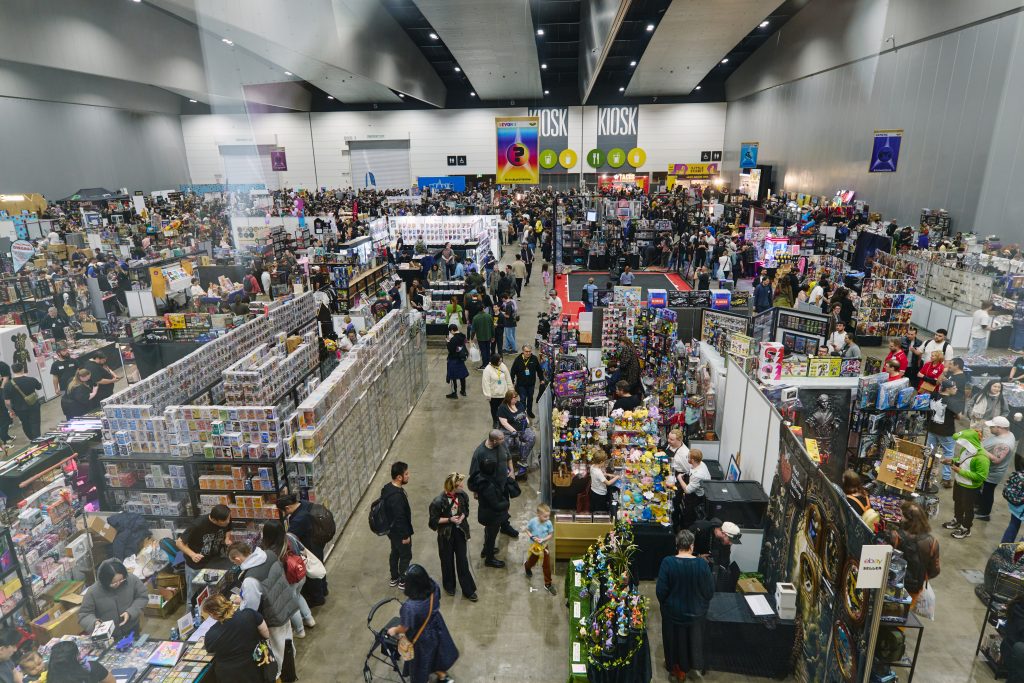
The team at TCG Grading encounters this misconception regularly at collector shows.
Someone brings in a card they pulled that weekend, still in its protective sleeve and absolutely convinced it’s a 10. But under angled lighting, a faint print line running straight through the artwork suddenly becomes visible. It’s almost impossible to spot head-on, but it’s been there since the card was printed.
The reaction is often the same: a moment of silence followed by, “How did I not see that?”
The opposite can happen, too. Some collectors bring in cards they’ve pulled out of old binders, expecting a relatively low grade. But the card can come back much higher than anticipated because what looked like wear was actually damage to the sleeve or binder page, rather than the card itself.
Both experiences highlight why first impressions aren’t always a reliable indicator of condition. Sometimes, a card isn’t quite as perfect as you thought. Other times, it’s in better shape than you expected.
What should collectors consider before submitting?
Grading doesn’t automatically increase a card’s value. As TCG Grading explains, its purpose is to provide a standardised, verifiable record of a card’s condition and authenticity, giving someone on the other side of the country, or even the world, confidence in what they’re buying without needing to physically inspect it.
That’s the real value of grading. It’s not a guarantee that a card will become more valuable once it’s in a slab.
If you’re considering submitting cards, there are three things worth keeping in mind.
1. Pre-screen your cards before submitting
Take the card out of its sleeve, hold it under a lamp and slowly tilt it through the light. Look for surface imperfections, check the centering on the back as well as the front, and compare each corner against the others.
A few minutes of honest inspection can help you identify potential issues before paying for grading.
2. Consider whether the numbers make sense
Grading costs money per card, so it’s worth understanding the potential difference in value between grades before submitting.
If the gap between a 9 and a 10 is relatively small for your particular card, the cost of grading might not be worthwhile regardless of the result.
Instead, consider which cards would genuinely benefit from having their condition and authenticity verified. That might include high-value cards, ones you intend to sell or insure, or cards where authenticity is a particular concern.
3. Don’t take the number personally
A 9 isn’t a failure, and it isn’t a judgement of you as a collector. It’s information about the card’s condition.
A grade doesn’t change the memories attached to a card, the excitement of pulling it or why you wanted it in your collection in the first place.
The card you love is exactly the same card it was before it went in the slab.
TCG Grading
Understanding what goes into a grade
A card’s journey doesn’t begin when a collector opens the pack. Manufacturing, printing and cutting can all influence its condition before it ever reaches your hands.
Understanding what graders look for can help collectors develop more realistic expectations, make informed decisions about submissions and better understand why a seemingly perfect card might not receive a perfect grade.
And whether your latest chase card comes back a 10 or a 9, its place in your collection doesn’t have to change.